Because good answers are in search of good questions.
Of late, several groups have been vigorously addressing issues of child rights, child participation, and violence against children. The right to life is a fundamental right enshrined in the Constitution of India, and it has been impressively elaborated upon by the higher courts of India. Hence, the right to a child-friendly city, or the right to safe environments and spaces, can be appropriately discussed under the umbrella of child rights.
Basically, a right is a claim—often forcefully made—by someone over something for themselves or on behalf of someone else. The claimant seeks recognition from a central authority of a society or nation-state (such as Royalty, the Church, a Dharmapeetham, or the State).
A claim becomes a right when the central authority recognizes it and formally upholds it. This upholding may vary in degree; it may be intensely genuine or an act of sheer tokenism. This variation, it is believed, reflects the authority’s “political will.”
When a claim becomes a right, it generates certain responsibilities for both parties—the claimant as well as the central authority. The former comes under specific obligations or responsibilities, starting from paying taxes to refraining from running a parallel system of law or using coercive power, as the latter is the monopoly of the state or central authority. The authority (hereinafter called the State) has an obligation to take positive action and remove obstacles to the individual’s enjoyment of their rights. Thus, a state removes obstacles and facilitates the enjoyment of rights by the right holder. Consequently, the individual right holder comes under an increasingly complex structure of obligations (e.g., following sanitation rules, not practicing medicine unless authorized by the state, and obeying traffic signals). Practically speaking, then, without obligations, there are no rights!
This is where the difference between the general rights of adults and the rights of children becomes visible.
First and foremost, for the purpose of this note, let me offer a working definition of childhood.
“Childhood refers to a phase of life characterized by a certain quality of living where all of one’s needs are fulfilled without having to work, earn, or pay for them. It is a phase where one is slowly and cautiously initiated into the adult roles required to sustain a society—a phase in early life where one is nourished by adult society and where there is adequate space for recreation and human warmth.”
The case of child rights is different. The rights of a child do not create any specific obligations on the part of the child. Instead, they are to be enjoyed by the child through positive action on the part of the State and adult society. This is done by making material and non-tangible resources available, removing obstacles to a child’s enjoyment of those rights, and penalizing those who violate them. So, in a way, child rights are a bundle of obligations levied on the State and adult society, with the child as the sole beneficiary.
Among many other things, children have a right to a safe physical and social environment as an integral part of the right to survival. Positive action by the State and adult society is a precondition for children to enjoy their rights.
Hence, for children to enjoy their various rights, the State and adult society must be held accountable. At times, however, adults must be informed, trained, and equipped to understand their obligations and the art of fulfilling them. On their part, children should be protected, enjoy leisure, have access to recreation, remain free from adult civic and economic obligations such as taxation, and creatively learn life skills. Needless to state, children must be able to acquire life skills and learn the art of responsible social interaction; they must also be made aware of social realities in an age-appropriate manner.
Here, we are limiting our discussion to underprivileged, vulnerable, and victimized children, to help whom the civil society sector has come forward with positive interventions. But is that truly happening in the child protection domain, especially within the civil society sector?
Before proceeding further, one point must be made clear: all children have to be socialized in an age-appropriate manner to eventually be able to look after themselves, care for their families, acquire employability, earn a livelihood, and perform their roles as responsible adults. There is no doubt about this.
Beyond that, however, it is time to find clear answers to some pressing questions:
- Are we “super-equipping” victimized, vulnerable, or underprivileged children to study the problems around them, understand solutions, and take social action to solve them? (This is called interest articulation).
- Are they then expected to give up their free leisure time to network and find supporters for their cause and claims? (This is called interest aggregation).
- Are they then expected to find ways to approach members of legislative and executive bodies to present their analysis and seek solutions? (This is called interest communication).
In doing so, are we expecting children to take on these additional adult responsibilities?
Is it fair? The backs of our children are already hurting from the ever-increasing weight of their school bags; are we not making those bags unreasonably heavier?
By doing this, are we expecting children to become and live like “non-children”? Are we turning them into super-adults to compensate for the inaction of a non-performing adult society and State? Are we concluding that adult society is hopeless, so we must arm children to look after themselves and perform adult responsibilities? Does this not make adult society even more irresponsible?
Should we feel proud to listen to these underprivileged child representatives in quasi-professional events or mock parliaments performing age-inappropriate socio-economic analyses, or should we feel concerned that they have lost the right to be children?
Given the distinctive nature of child rights—where they differ from adult rights in that:
- Child rights do not create matching obligations on the part of the children;
- Child rights create an exclusive set of obligations on the part of the State and adult society; and
- Child rights can be enjoyed by children only through positive action on the part of the State and adult society.
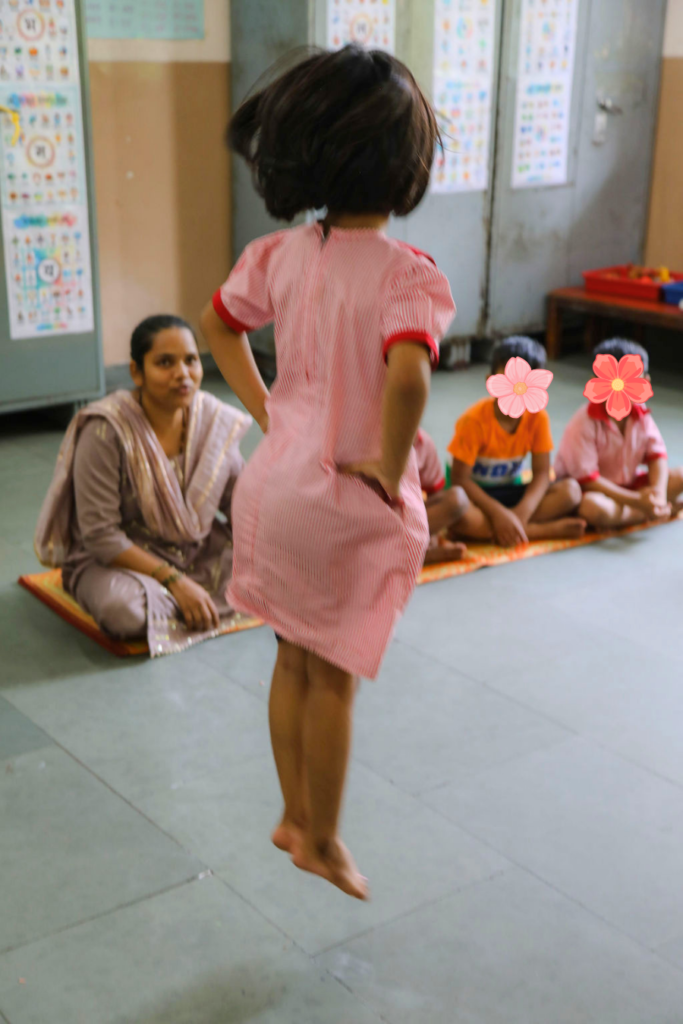
Children—especially those who are vulnerable, victimized, and underprivileged—should be left alone to enjoy their childhood, innocence, and recreation, and to occupy their spaces in schools, neighborhoods, and playgrounds. They should not be made into self-defending super-adults. It is time to answer these questions.
Of course, this is not to question the importance of ensuring all children are socially informed and equipped with essential life skills in an age-appropriate manner.