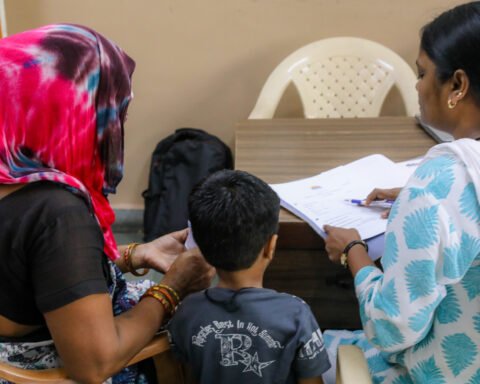
What it took to register the birth of one child.
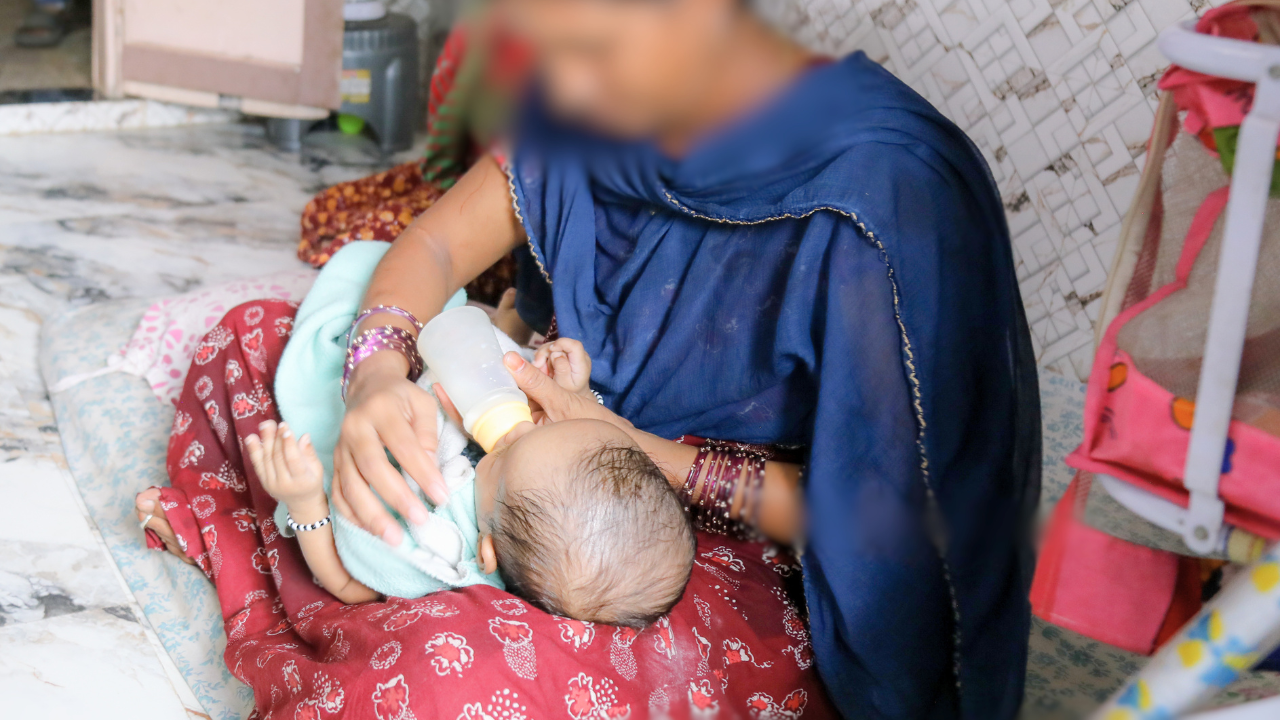
For the World Day Against Trafficking In Persons 2026, the United Nations has chosen the theme “Trapped Behind the Scam,” drawing attention to people trafficked into online scam operations and forced into criminality. The setting is new. The method is not. For a long time, many trafficking cases have begun the same way: with the promise of a decent job.
At Prerana, we have spent nearly four decades working with children and women affected by trafficking and commercial sexual exploitation. In that time we have learned that rescue is not the end of a case. Very often, it is the point at which the hardest work begins — and that work is rarely dramatic. It looks like forms, applications, offices, follow-ups. It looks like trying, for months, to get one child’s name written down somewhere official.
This is the story of one such intervention.
The Promise
Zoya (name changed) crossed the border from Bangladesh after meeting a man online. He offered her a relationship, and then a job — household work with a good family in India. She travelled with him from Howrah to Ranchi to Mumbai.
He kept her for a few days. Then he persuaded her to sleep with a man, telling her it was only to get money to survive. It was a doorway. Within days she had been sold to a brothel in a red-light area of Mumbai.
In a raid in September 2024, she was rescued by the Mumbai Police and admitted to a protective home. She was three months pregnant at the time and did not disclose it to anyone. When the caregivers later found out, and the doctors asked whether she wished to terminate the pregnancy, she declined. Her daughter was born in a government hospital in February 2025.
Zoya asked the Court to facilitate her repatriation to Bangladesh. A repatriation order was passed, and in due course her travel permit came through. It was at that point that the authorities realised the obvious: her infant daughter would also need valid travel documents to accompany her. And before any travel document could be issued, the child’s birth had to be registered.
Seven months had passed, in October 2025, the Court directed that the child’s birth certificate be obtained from the hospital. The protective home where Zoya and her daughter were residing approached Prerana for assistance, and in November 2025, I was given responsibility for the case.
What Should Have Been Routine
I expected this to be simple. Zoya had preserved every hospital record from her pregnancy and delivery — the discharge summary, the medical papers, everything. The child had been born in a government hospital, under medical supervision, with full documentation. I assumed the records would be sufficient.
Prerana runs a Legal Aid Clinic at the protective home with the support of the District Legal Services Authority, so I began there, with my seniors, and then approached the hospital and the birth registration department of the municipal ward under whose jurisdiction it falls.
At the ward office I was told what to bring: the application form, a photocopy of the discharge papers, and the Aadhaar card of the mother or the father.
Zoya had no Aadhaar card. She is a foreign national who was trafficked into India. She has never had one.
Over the following months I approached the municipal hospital, the birth registration department, the ward office, the Medical Officer, and the Tahsildar’s office to discuss the speciality of this case and how it could be approached. Applications were submitted. Letters were drafted. Meetings were held and repeated. Different authorities interpreted the requirement differently. One office told us the hospital could register the birth because the child was under a year old, and that after a year it would have to go to the Tahsildar. The Tahsildar’s office told us that under a recently amended law, registration was not possible because neither parent held an Aadhaar card.
Officials pointed consistently to the Registration of Births and Deaths (Amendment) Act, 2023. As a law student, I read it closely. What I found was ambiguity — and no clear procedure at all for registering the birth of a child born in India to an undocumented foreign national. The system was not equipped to answer the question we were asking.
Meanwhile the child turned one. A year old, and stateless on paper.
The Question We Chose Not To Ask
Early on, I made a deliberate decision not to disclose to the authorities that Zoya was a victim of trafficking and commercial sexual exploitation. Experience has taught our team that such disclosures invite stigma and bias, and that bias changes how a file is treated. I wanted the application judged on one basis only: the child’s legal right to have her birth registered. Later in the process, when we had run out of other explanations, we did disclose her circumstances. It did not unlock the door.
I also never asked Zoya about the identity of her child’s father. She had not offered it, and I did not believe the question should be put to her unless it became necessary and she was ready to answer it. On my visits I simply updated her on where the application stood.
On one such visit, I told her that the authorities were insisting on the Aadhaar details of the child’s parents. I still remember her face. She looked at me and said nothing.
In that silence was the whole problem. What the authorities experienced as a routine documentation requirement meant something entirely different to a woman who had been trafficked and sexually exploited. Administrative processes, applied without sensitivity, can retraumatise a person who has already lived through violence.
Colleagues at Prerana who have worked in and around red-light areas for over a decade will say this plainly: for women in prostitution, establishing legal parentage on paper is often simply impossible. Fathers may be unknown, absent, deceased, untraceable, or unwilling. This is not a unique case. It is one of the largest structural reasons that documentation fails these families — and our systems have still not accounted for it.
A Name, At Last
As the procedural barriers held, I sought the guidance of the Child Welfare Committee, on the advice of the Probation Officer at the protective home. Alongside this, the authorities at the Protective Home were in continuous contact with the Bangladesh Embassy, and continued to write to the hospital’s Medical Officer.
Eventually the Embassy told us about a workaround: get them any official document that recorded the child’s name.
We took this to the Child Welfare Committee. The CWC passed an Order permitting the child, named in the Order, to be repatriated with her mother to their home in Bangladesh.
It was the first time this child’s name had appeared in an official document. She was more than a year old.
The Embassy accepted the CWC order. The repatriation process moved immediately. Her travel document was processed, and she will leave for Bangladesh with her mother soon.
Why A Piece Of Paper
Zoya’s daughter did not need a birth certificate only to board a flight. She will need it for school. For every social security entitlement she may one day claim. For proof, at every stage of her life, that she exists.
Every child has the right to be registered immediately after birth and to have a name and a nationality. These rights are set out in the United Nations Convention on the Rights of the Child. When registration becomes inaccessible because of a parent’s nationality, poverty or circumstances, it is the child who is excluded — a child who has done nothing wrong.
I am frequently asked why I returned to social work while pursuing a Law degree. To me, social work is a rigorous, evidence-based discipline grounded in theory and ethics. Combining my undergraduate and postgraduate degrees in social work with my legal studies has only deepened my commitment to advocacy—whether that means navigating complex institutions, coordinating care, or standing alongside someone vulnerable and helping them stand up for their rights.
What Trafficking Leaves Behind
The internationally agreed definition of trafficking, set out in the UN Protocol supplementing the Convention against Transnational Organized Crime (Palermo Protocol), turns on three elements:
an act — recruitment, transport, harbouring;
a means — force, coercion, fraud, deception, or taking advantage of a position of vulnerability;
and a purpose — exploitation, including the exploitation of the prostitution of others.
Zoya’s case contains all three, exactly as written. She was recruited online and moved across a border and three states. The means was deception, a promise of household work, followed by coercion once she had no money, no language, and no way home. The purpose was to sell her into the sex trade.
But the definition ends where the harm does not. Nothing in it accounts for a child born a year later, in a city her mother was trafficked into, to a woman with no documents to her name. That child was not trafficked. She was never rescued, because she was never captured. And yet the architecture of exclusion built around her mother — no Aadhaar, no nationality on record, no traceable father — closed around her at birth and very nearly followed her into adulthood.
This is what we mean when we say trafficking does not end with a raid. It produces a second generation of people who must prove they exist.
Zoya’s story is one among many. It is a reminder that laws and policies serve their purpose only when they work for the people who need them most — and that the damage trafficking does is never contained within the life of the person who was trafficked.