Prerana has been working with child victims of sexual violence for over four decades now. With the advent of POCSO in 2012, we were one of the first organizations to support the system in its implementation. We have also been working as Support Persons to support child victims and their families through the process of investigation and trial as envisaged under the POCSO Rules 2020.
A Dilemma from the Field
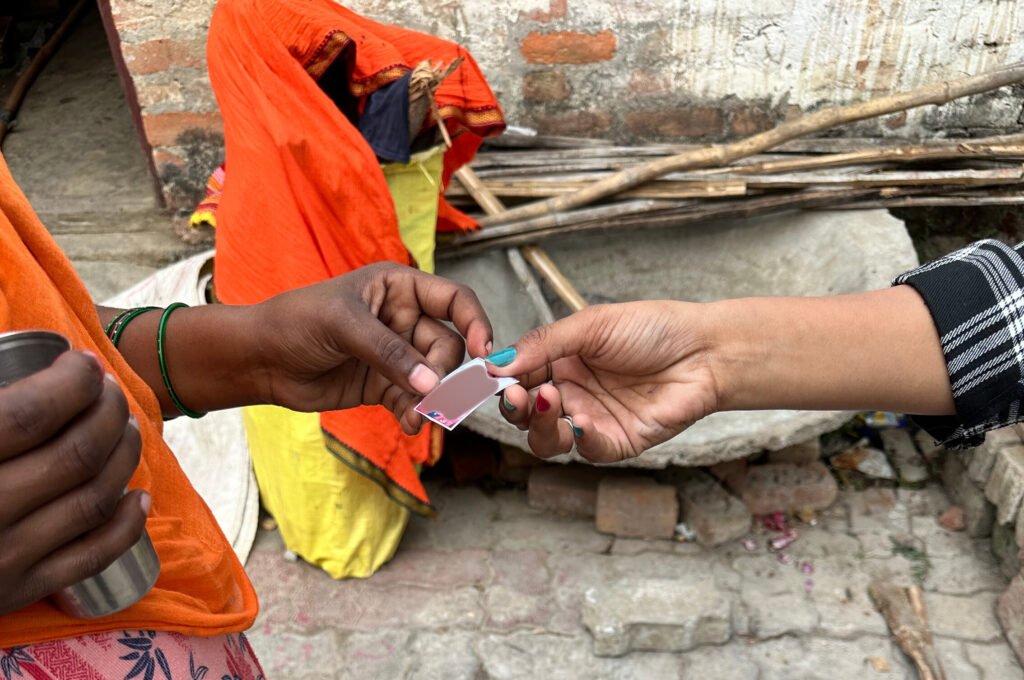
During an internal case management meeting in November 2025, a young professional working as a Support Person(SP) presented a dilemma that many practitioners experience. She described the case of a 17-year old girl child whose family had clearly stated that they did not require assistance from a Support Person. They further requested that the SP “not bother them.”
The family shared that they had not wished to file an FIR but were told they must, and therefore complied. They expressed a desire to return to “normal life” as soon as possible. Although the Support Person had explained her role and the range of assistance available, the family insisted that they would navigate the investigation and trial on their own.
When our colleague shared this experience, one of the other team members in the meeting shared that this situation is becoming common in adolescent romantic relationship cases.
| A 2022 study by Enfold Proactive Health Trust and UNICEF-India revealed that roughly one in four cases (24.3%) registered under the Protection of Children from Sexual Offences (POCSO) Act in Assam, Maharashtra, and West Bengal between 2016 and 2020 were, in fact, “romantic cases” involving consensual, non-exploitative relationships between two consenting individuals. |
A Critical Question From the Field
During the meeting, we further contemplated:
- Why does the system appoint a Support Person without first taking the child and family into confidence?
- Where is the child’s voice? Isn’t their consent important? Rule 4(8) of the POCSO Rules clearly states the significance of this consent.
- Shouldn’t the child and a trustworthy adult be oriented to the provision and the role of a Support Person so they can make an informed decision?
- Should the CWC clarify that refusing support now does not prevent them from seeking support later?
These are important questions rooted in ethics, child rights, participation, and informed decision-making—principles central to social work practice.
Understanding the Child’s Refusal: Privacy, Confidentiality, and Dignity
We continued the discussion by reflecting on a child’s right to privacy, confidentiality, and dignity.
Based on collective field experience, several reasons emerged for refusal of support:
- Some children do not want any more people to know what they have gone through.
- They may have already experienced a breach of confidentiality—school authorities, friends, family, and neighbours often become aware of the incident.
- With this increased exposure, children may feel they have lost their dignity, and therefore prefer fewer people involved.
- Sometimes children and families have also refused the assistance of the SP due to prior hostile/distressing experiences with formal systems before the SP came into the picture. Interactions with police, medical personnel, or courts involved insensitive questioning, repeated narrating of the incident, victim-blaming, or lack of empathy, which in turn led to fear, mistrust, and re-traumatisation
- Some children and families have a trusted adult who is supporting them with rehabilitation as well as navigate through the investigation and trial.
A System Under Strain: Understanding the Context
My first response was to validate the Support Person’s experience. I also felt the need to help the group understand the structural realities within which Child Welfare Committees (CWCs) function.
While their concerns were valid, the systemic context cannot be ignored:
- In several districts, the CWC has to address up to over 70-80 cases per week.
- CWCs often function with inadequate administrative and social work support; many depend on NGOs, and even then, CWCs may hesitate to fully rely on them. When systems are stretched, the time and attention required for meaningful child-friendly orientation often gets compromised.
- Apart from conducting inquiries and passing orders/ making decisions on rehabilitation of children, CWCs are expected to also inspect Child Care Institutions (CCIs) and file reports on their functioning.
- Under the JJ Act 2015, CWCs shoulder a wide range of statutory duties, including:
- Inquiry into CNCP cases
- Passing care, protection, and rehabilitation orders
- Monitoring CCIs
- Ensuring restoration
- Supervising follow-up and Individual Care Plans
- Ensuring access to legal aid
- Maintaining documentation and records
- Coordination with DCPUs
Given these responsibilities, and the absence of structured training in case management, even CWC members who understand the importance of child participation often lack the time to orient children and families in detail.
Many do not have DCPUs to whom they can delegate this crucial task.
Revisiting the Legal Framework: Consent and the Role of the Support Person
We revisited Rule 4(8–13) of the POCSO Rules, which clearly outlines:
- The process of appointing a Support Person
- The requirement to inform the child and guardian about the Support Person’s role
- The need for their consent.
Importantly, nowhere does the rule state that if a child or family declines support once, they cannot approach the CWC later to request help.
Both the JJ Act 2015 and POCSO 2012 emphasise:
- Best interest of the child, and
- The principle of individualisation—case-by-case decision-making.
We also agreed on the need to read in detail the Supreme Court of India judgment of August 2023 delivered by Justice S. Ravindra Bhat and Justice Aravind Kumar, as well as the guidelines by the Centre WCD under Section 39 Of POCSO Act 2012.
Where Do We Go From Here? Strengthening Practice
The young Support Person’s question reflects a larger systemic tension:
How do we uphold the rights of children and families—including the right to informed choice—within an overburdened system that is keen on doing right by the children?
To strengthen practice, both systems and practitioners must consider the following:
- Strengthen orientation processes so that children and families truly understand the purpose, scope, and benefits of having a Support Person. The CWC could delegate this to the DCPU.
- Ensure that refusal is documented but not treated as final—families must know they can return for support anytime.
- Advocate for capacity-building of CWC members in case management, trauma-informed practice, and participatory decision-making.
- Invest in adequate staffing, including trained social workers, DCPU who can support CWCs in child-friendly interactions.
- Ensure that Support Persons are not appointed as a token measure, in order to share that data on appointments is shared with higher authorities.
- In a resource-constrained setting, prioritise children who want and need support most.
- Recognise that some children already have adults whom they trust—family members, shared household members, or parents—and may not feel the need for additional support during investigation and trial and for rehabilitation.
A Closing Reflection
The Support Person’s question was not merely procedural—it was deeply ethical. It highlighted the gap between what the law envisions and what the system is currently equipped to deliver.
It also reminded us that even within imperfect systems, we must continue to uphold the voice, agency, dignity, and choices of children and their families.